Uncategorized

Uncategorized

Book excerpt: ‘In the memory of my father’ by Rathindranath Tagore

  Rathindranath Tagore’s Bengali biography of Rabindranath Tagore is a empathic and nuanced portrait of his father, creating a portrait of his life and fortune–an excerpt from Chaitali’s translation-an exclusive Special Feature on Tagore’s birth anniversary. An excerpt from the memoir ‘Pitrismriti‘: Baba named our houseboat Padma. The name reflected the love he had for the river Padma. The boat was closely associated with Shilaidaha, located at the estuary of Padma and Gorai rivers. Although it was my father’s favorite boat, our family too have close association with the Padma boat. So, many things will remain incomplete if I don’t talk about it.              The boat carried a history of its own. Most likely it was built in Dhaka as commissioned by my great grandfather Dwarakanath Tagore. Its structure was similar to that of a barrow, although a bit larger. The rooms were very spacious and as comfortable as the rooms in our home. At first, the boat remained moored on the banks of the Ganges in Calcutta. Maharshi Debendranath, my grandfather, travelled in this houseboat. As mentioned in his autobiography, it was with this boat he left for Varanasi in 1846. When the news of his father’s death in London reached him, he was on his way to Varanasi. Hearing the news, he turned the boat around and came to Calcutta. When the Maharshi did not use the boat any longer, it was kept at Shilaidaha.             Before the railways, boats were the standard means of travel, especially in Bengal, where there are no dearth of rivers and canals. Landlords and well-off businessmen kept many types of boats. They used to have bajrah, the pleasure-boats for their own use. These boats were rather wide in structure and flat bottomed. This enabled the boats to break water and move forward, even in the shallow rivers. Usually, the bajrahs consisted of two rooms fitted with all the amenities. It was customary to get them made by the craftsmen in Dhaka, they’re masters in this profession! Once the steam engines came, the use of waterways decreased, and the utility of boats also disappeared. Bajrahs are rarely seen on the rivers these days!  Read the full excerpt on Different Truths– Social Journalism platform
Uncategorized

Visual verse: UNTOUCHED

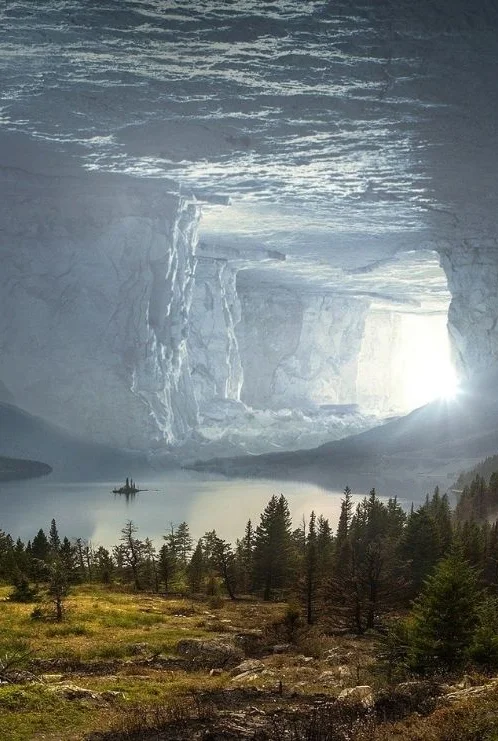
  It opens up like a split-second vision in a thunderous flash, a fleeting, evanescent image conjuring up the past and future. Like a photographic ideal. Both for the seer and the seen. A moving mirror, like a sacred vision, pirouettes against the canvas of the blue limitlessness, rearranging the signs of the physical universe with an infinite array of glistening reflections. She feels as if she is looking through a glass of hard rock ice beyond the tunnel of her suffering. A passage from night to a bright day, when the image suddenly bleeds before her eyes, leaps to her mind and swells, producing a strange intoxication of a vision that unfurls in the breeze around the placid lake. There, against the pure light, it is impossible to feel the edge of the abyss, the desolating depths of darkness and evil. It anchors her, shelters her in this azure canopy of bewitching luminosity. It has been like that for her for quite some time now. Images appearing and disappearing, leaving her to wonder whether those were more dreamt than seen. But the pure sensation that comes over, a compressed energy running through her, dismantling the infinite, dizzying her to merge with the bright light on the other end of the tunnel. No, that is no hallucination. There’s a hidden energy, a hidden will she knows in the limpid grace of water, as it tries to place her out of her own self, connecting her with a silence, untouched. She tries to decode the message, in its final form; it vanishes, making her its hypnotic prisoner. What was it, she wonders? Could it be the sign of a future humanity promising eternity? By Chaitali Sengupta Published at: https://visualverse.org/submissions/a-silence-un-touched/ Image by Stefan Keller given as a prompt at Visual verse

Uncategorized

Translation: Jani tomar ojana nahi go

Jaani tomar ojona nahi go…… a melodious songby Tagore, with deeply spiritual meanings. This translation of mine was published in Geetabitan.com in the year 2016. The secrets in my heart, is not unknown to thee Much as I wish to keep it a secret, My eyes reveal every bit of it. Afraid of saying what I don’t mean I keep away, far away from you. On the wayside, I stay away And yet you come to know What lurks in the secrets of my heart. The shadowy silence, in my hidden, secluded altarIs shattered by your pealing laughter. Every desolate hours of mine Is spent in deep rumination As I, unmindfully wield a song You hear every now and then And come to know What lurks in the secret of my heart. – Translated by Chaitali Senguptahttps://www.geetabitan.com/lyrics/rs-j/jaani-tomar-ajaana-english-translation.html Picture credit: Free Photo, Pixabay, James Wheeler.

Uncategorized

Visual verse: What is over the exile fence?

Visual verse: online Anthology of Art and Words is a Berlin/London based Anthology of Art and Words. It is an Ekpharistic journal that gives a compelling image, challenging writers to come up with their own artistic inputs. The picture becomes the prompt. I tried this for the first time. Please find the work here: What’s over the exile fence? Life at our side of the exile fence is one of angst. Of not being sure. The fence, from my childhood, seemed to be great wall. One that fenced us in, within our lot. Here, we would often come, trailing after our mud-caked football, chewing bubble gum and watch them in high boots, driving nails into the fence. Stay away, the crow warns us, cawing from the fence. Sometimes, I wished, should I climb over? But fear, like steel bird, hanged its large wings over me. Surveillance has many eyes and those float in space. I dream often, how is life at the other end? I see people packing their bags and leaving. Through barbed wires, jumping over the gaps. For that other side, where they say sun comes up in technicolor hues and the world is not a battered blue…. It’s a relief from destiny. Another gap, I discovered today. I peeped through it, watching the twilight through my dark side. I wished I could get a little closer, to that bright flame of hope on the other side. The crow cawed again, and my feet fell rooted. Photo Credit: Free domain photos, Pixabay

HOME, Uncategorized

Prose: The Rambling Path

1. Here is the rambling path. It travels out to the fields, from the forest, and through the open fields to the river’s edge, trailing under the shade of the Banyan tree, just beside the ferry ghat. And then, it winds through the broken banks on the opposite shore, before meandering into the village. Further on, skirting beside the linseed fields, bowering through the shadows of the mango-groves, edging by the lotus-pond, passing by Rathtala, and finally reaching into a village unknown to me. On this path, so many have walked- some who have walked past me, some who have kept me company, while some have seen only from a distance! Some have worn a veil; others have not. Some going to fetch water, while others returning, their pitchers brimming with water. 2. The day is now at its end. Darkness is descending. Once upon a time, this path seemed to be my own, belonging exclusively to me. Now I see that I’ve the permission to walk upon this path only once, and no more. Passing the lemon-grove, the bank beside the pond, that ghat of the twelve temples, the silt-ridden riverbed, the cowshed, the granary storing paddy, passing those familiar glances, the familiar voices, the known faces, I will never go back and say again, “Hello, there you are!” For this path is the one where one walks ahead; this is not a path of returning. In the greying dusk of the evening today, I turned back once. I saw this path embracing the many forgotten footprints of the past, that are attuned to the melodious notes of the raga ‘Bhairavi.’ The path has briefly sketched, in a single line of dust, all the life-stories of the travelers who have sojourned this path. A single track that stretches from the sunrise to the sunset, from one golden door to another. 3. ‘O rambling path, do not keep the tales of those voices of the past fettered to your dusty ways. I’m waiting with my ears attuned to your dust, do whisper the tales to me.’ The path falls silent, its forefinger pointing towards night’s dark veil. ‘O rambling path, all those travelers, their thoughts, their desires- pray, where are they all gone?’ The mute path refuses to speak up. It only spreads its sign, between sunrise to the sunset. ‘O rambling path, those footsteps that once fell upon your breast, like a shower of flowers, are they all traceless today?’ But does the path now its destination? Does it know the way where the flowers have disappeared, and where those silent songs have reached? Does it know where the starry light dazzle the perennial pain brightly, like the festival of light? Original: Rabindranath Tagore Translation: Chaitali Sengupta

Built with creativity and care by DigitalSpan
Scroll to Top