Poems

Poems

1971, Noakhali

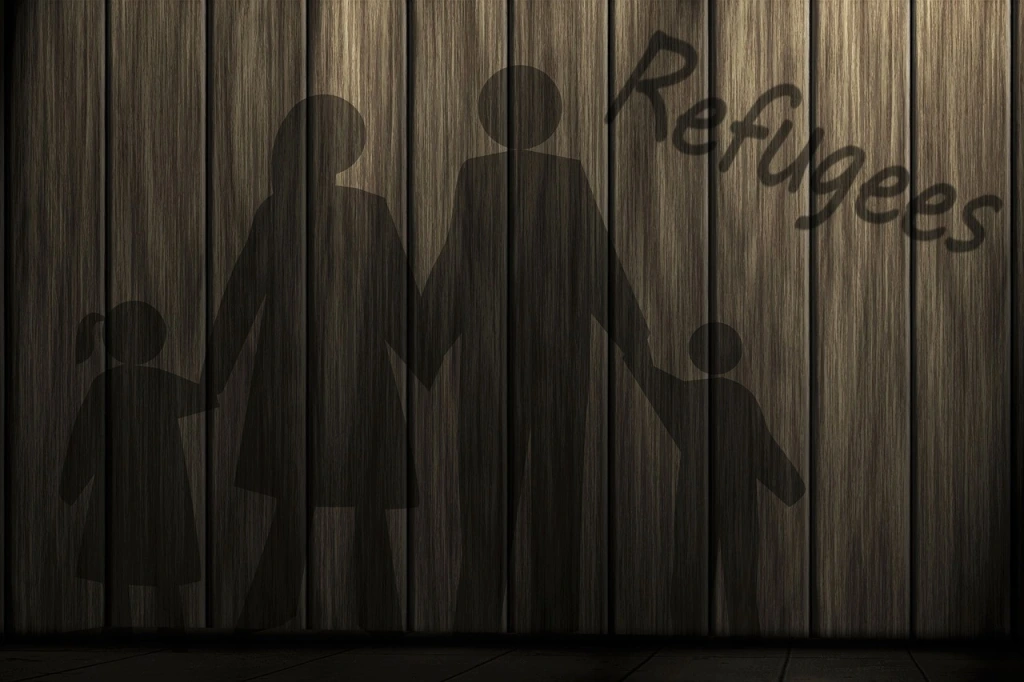
1971, Noakhali  Noakhali is a landmine in her memory that only reels backward. Sits like a land   spreading its river of sorrow. A land thrice  partitioned. Each time she shuts her eyes,    a time bomb explodes in the scratch pad of  her brain. What happened to Zoya, my daughter?    Who knows where she went? Who knows  where she sleeps? And her brother?   What have you done to them? Who’ll bring my  message to them? In the naked sunlight of a    Kolkata camp, she sits, sticking to the lamppost,  like a flapping poster. Raped, like her land.    Nameless, counting the scars of hell. The stories she saved from 1971, knotted in the end of her sari, squeezed   into the tiniest of knots. Lest she may forget.  Stories of people gone missing. Like the lace    torn off the hem of her petticoat. Their white  gasps before death, countless times she    remembers the names. And the frequent deaths.  Like the abandoned pages of history, long archived.    Her abused flesh knows no hope to escape.  It sits like a torn kite, forever exiled on the tramlines.    This poem forms a part of my forthcoming poetry collection based on the theme of War, migration, survival and hope. It depicts the plight of the women refugees who are most of the time caught up in the gender-based violence as they flee their land. Photo Credit: Pixabay

Poems

Poem: Bereaved words, discarded metaphors

By Chaitali Sengupta Sometimes, a few drops of ink,  create words, falling in a soothing rhythm, the ups and the downs, in a beautiful dance, of resisting and giving in, of grasping and releasing, of dissolving and merging, of holding each thought like the newborn drop of rain. And, sometimes,  the thoughts are like open wounds, no, they have no words. Only letters, on their way to self-destruction… Just like a heap of promises, never kept. Read it on the pages of Setu

Blog, Poems

Poem: The path seeks you

The Intercultural Poetry and Performance Library (IPPL)  has brought out two poems written by me in their current issue. Here is the first one. For all those who do not know- The Intercultural Poetry and Performance Library (IPPL) is a non-profit organization that aims to generate academic interest towards poetry, nurture creativity and reading habits. The IPPL is committed to bringing poetry to the heart of the nation. Luminaries like Sankha Ghosh (Former President, Advisory Board), Bashabi Fraser (Chief Ideator and President, Advisory Board), Sanjukta Dasgupta (President), Jaydeep Sarangi (Vice President) are associated with IPPL.   The path seeks you Sometimes, the sea within you shifts to make a path, the wayward waves, crashing inside, map the endless twists and turns, like a signpost on your soul. Or, like the jagged lifeline on your palms, threading, winding, through the creased canvas of your skin, arriving at the crossroads of destiny. Sometimes, you are like the water creating your own way, through the shimmering flow, to the tumultuous expanse of the infinite deep. Then, the path seeks you. Then, you are the path. By Chaitali Sengupta You can browse the other poem here: https://ippljournal.org/issue-4-april-2023/chaitali-sengupta/ Photo Credit: Pixabay, free photos

Blog, Poems, Translation

Translation: 3 poems from Tagore’s LIPIKA

By Chaitali Sengupta The original prose poems by Rabindranath Tagore, Purono bari (The old house), Banshi (Theflute) and Prothom Shok (First sorrow) were collected in Lipika first published in 1922 (BE1329). It is a small book where Tagore introduced short poetic prose pieces. THE FLUTE The voice of the flute is an eternal one, a voice belonging to forever; just as the descent of theGanges, flowing out of the matted locks of Shiva, spilling upon the breast of earth. Like achild of heaven, she plunges down, wishing to frolic with the dust on earth, in her quest of theheavenly game. Standing on the wayside, I hear the flute’s strain; it fills my mind with feelings unknown. Itry hard to relate the ache that comes from the tune, with my mundane joys and sorrows, butin vain. I realize that it is more scintillating than any joys I’ve experienced; more intense thanany tears that I’ve shed. It makes me feel that the truth resides not in knowing, but it dwells in the unknown. How ismind able to think in this capricious manner? I’ve no answer to that. At dawn today, I woke up hearing the tune of the flute. There was a wedding in the nearbyhome. The melodious strain that emanates from the flute on the first day of marriage matchesin no way with the tunes of the days that follow. Can the flute, like a divine oracle, warn usabout the private frustration, the deep dejection, the neglect, the insult, and the sheer fatigue,about our restrained desires, our monstrous bickering, the unforgiving petty conflicts, thedusty miserliness of our daily life struggles? The veil of the familiar, regular words upon the mundane life is yanked away in one go withthe melodious strain of the flute. The bride and the groom exchange their first glance of lovein the blessed moment, and unite forever under the delicate canopy, as the groom lifts the redveil of his demure bride. And the flute, through its tuneful melody, sings of this exaltedmoment. When the flute plays along the songs of exchanging the garland of love, I look towards thebride, being wed in our neighboring home. Wearing a golden necklace around her neck, apair of anklets on her feet, she stands on a lotus of joy that grew in the lake of tears. As I look through the melody of the flute, she appears ethereal to me. The girl, who was oncea familiar face from the known household, now manifests as the bride of an unknown family.The flute says, “This is the truth.” Read other two translations here: https://museindia.com/Home/ViewContentData?arttype=poems&issid=105&menuid=10317 

Poems

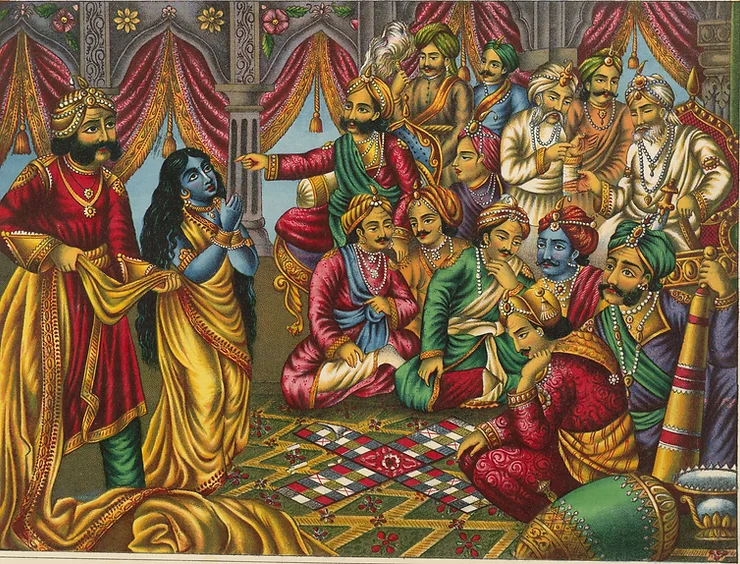
Poem: Draupadi

    From the womb of blazing sacrificial fire, She is born. A woman devoid of childhood, a feminine pawn. Split among five men She is yagnaseni, the daughter of fire. And forever she burns, in the patriarchal flame of hatred, greed, lust and ambition like an earth on fire.   Helpless, bleeding, wrapped in one cloth, she stands helpless, on the streets of history, bereft of honor, covering herself in shame. Her flowing mane, untamed, blood-red, twisted in the hands of tyranny causing a thousand pain. Her pain is the pain of each disrobed woman, her torment, a legacy, stitched to our soul. Her honor, still a question mark, a movable property, on the shrine of Dharma.   Through the raging river of time, the stripping continues, through cultures, through societies, the same draupadis, gambled and given away, at the hands of patriarchy.   Draupadi: She is the tragic heroine, one of the central characters and the common wife of the Pandavas in the Indian epic, Mahabharata. Yagnaseni: is another name for Draupadi in the epic Mahabharat. Dharma: The concept of Dharma is pan-indian. It means broadly the path of righteousness Published at: https://concettapipia.wixsite.com/aspiringwriterssoc/post/poetry-22 Photo Credit: https://upload.wikimedia.org/wikipedia/commons/0/05/Draupadi_s_presented_to_a_pachisi_game.jpghttps://upload.wikimedia.org/wikipedia/commons/0/05/Draupadi_s_presented_to_a_pachisi_game.jpg

Poems

Prose: Life, cognition & creativity

When silence speaks through Nature…… Rustle of Nature. Through the pausing seasons, forming a lullaby. And to be a part of it, the feeling of oneness with it, can be an amazing experience. On an early morning walk through the woods nearby, when the world around is deep in sleep while you hold a deep conversation with the gentle breeze… the breeze that caress you and leaves you with that lingering smell of unknown flowers, like a parting gift… in that brief moment does it not impress upon your heart that the Nature is continuously in motion and yet there’s no noise?These fleeting moments when you clearly hear the trembling in the leaves of trees, the endless cooing of the pre-dawn birds, the languid movement of the flies, the droning buzz of the insects, the fleeting flight of the scary squirrels, the comforting rush of water in the babbling brooks and the creeks… these rhythmic rustling in Nature contribute to the early hour’s concert. These rustlings put one in deep calmness, penetrating deep to our core, through the veneer of noise.And the rustle of the dead leaves, as you tread upon them, in the season of Fall! Ever since my stay in Europe, I’ve always found it mesmerizing to watch the trees shedding leaves. It is amazing how the leaves turn in autumn, how the trees change in the Fall, how they do not struggle to hold on to foliage but releases them in order to be complete in their cycle of growth, preparing for what comes next in their evolution as “tree.” The grace and the ease with which they do that… There’s a huge lesson there. This whole process reminds me of those deeply philosophical lines by Tagore “Naahi kshay, naahi shesh, naahi naahi dainyolesh…“(No decay exists, no end either, not even weariness)And beneath this seasonal rustle in Nature, there is a deep silence. Awesome is that silence, pitted against the noise of nonsense created by us- humans. This profound silence is comforting. It soothes. It tunes your heart to the quietness. It perhaps diminishes the belief we falsely have of our own permanence in this world. It fills you with awe at simply being alive and part of a marvelous, vast, mysterious Universe. In the brief life of man, how can these moments be insignificant? By Chaitali Sengupta Published at: https://www.setumag.com/2020/12/chaitali-sengupta-life-cognition-and.html

Built with creativity and care by DigitalSpan
Scroll to Top