
Translation

Review, Translation

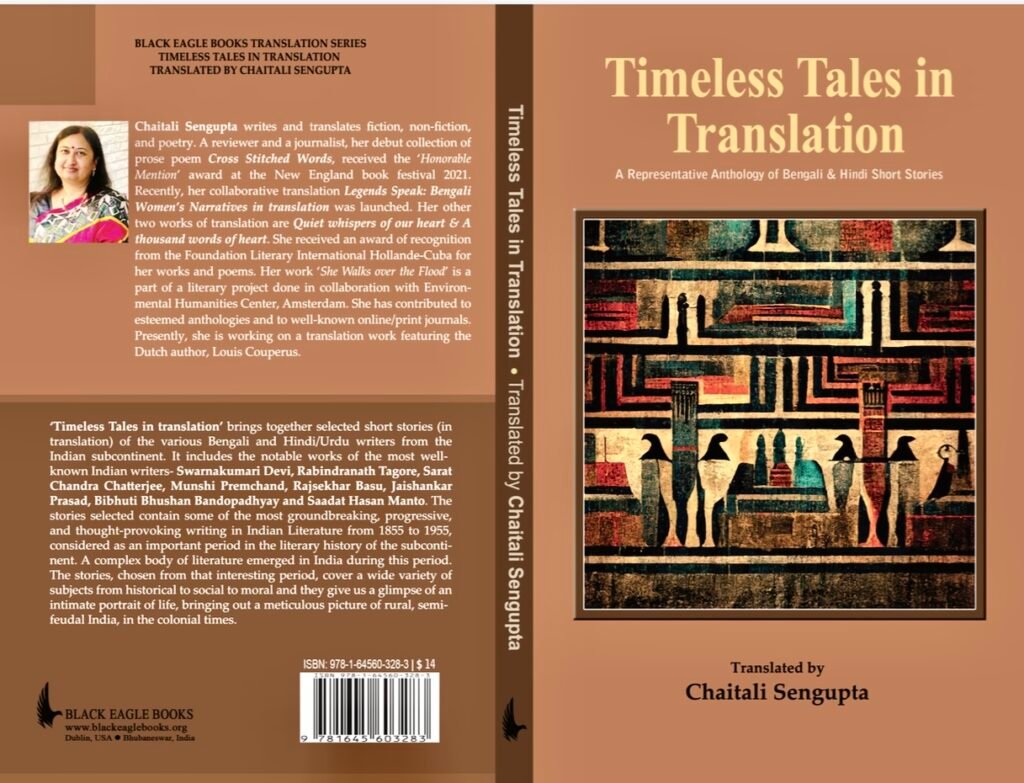
Review: Timeless Tales in Translation

By Lopamudra Banerjee “Translation is not a matter of words only: it is a matter of making intelligible a whole culture.” – Anthony Burgess While embarking on a journey of both reading and internalizing classic texts in translation, which attempts to bridge the gap between languages, cultures, continents, I have been always intrigued to know the literary or metaphorical truths that an author intends to depict in his literary work. Can a translator really transcribe those truths while translating the aforesaid work from the source language has been a quest for me as a reader always. Also, while translating Indian literature into English, is it possible to recreate the particulars of the eastern/oriental culture and environment and portray those nuances in English?  As I started flipping through the pages of ‘Timeless Tales of Translation: A Representative Anthology of Bengali and Hindi Short Stories’ penned by prolific poet, author, translator Chaitali Sengupta from Netherlands, these questions kept brimming in my inquisitive mind. All the stories translated in the collection have been penned during the very critical chronological time-frame of the colonial regime (from the mid-nineteenth century till the mid 1950’s) of India. In the foreword to this meticulously presented collection of translated classic tales, quite aptly named ‘Timeless Tales in Translation’, Dr. Sanjukta Dasgupta, author, poet and renowned scholar points out very significantly: “All the stories selected foreground certain timeless, universal emotions, feelings, sentiments, love…empathy and transcendence…Despite the problems that are embedded within translation practices, it is translation as cultural transfer that sensitizes the world about cultural diversity.”   Read the full review at this link: https://www.setumag.com/2023/04/timeless-tales-in-translation-by.html
Blog, Poems, Translation

Translation: 3 poems from Tagore’s LIPIKA

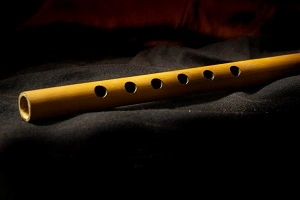
By Chaitali Sengupta The original prose poems by Rabindranath Tagore, Purono bari (The old house), Banshi (Theflute) and Prothom Shok (First sorrow) were collected in Lipika first published in 1922 (BE1329). It is a small book where Tagore introduced short poetic prose pieces. THE FLUTE The voice of the flute is an eternal one, a voice belonging to forever; just as the descent of theGanges, flowing out of the matted locks of Shiva, spilling upon the breast of earth. Like achild of heaven, she plunges down, wishing to frolic with the dust on earth, in her quest of theheavenly game. Standing on the wayside, I hear the flute’s strain; it fills my mind with feelings unknown. Itry hard to relate the ache that comes from the tune, with my mundane joys and sorrows, butin vain. I realize that it is more scintillating than any joys I’ve experienced; more intense thanany tears that I’ve shed. It makes me feel that the truth resides not in knowing, but it dwells in the unknown. How ismind able to think in this capricious manner? I’ve no answer to that. At dawn today, I woke up hearing the tune of the flute. There was a wedding in the nearbyhome. The melodious strain that emanates from the flute on the first day of marriage matchesin no way with the tunes of the days that follow. Can the flute, like a divine oracle, warn usabout the private frustration, the deep dejection, the neglect, the insult, and the sheer fatigue,about our restrained desires, our monstrous bickering, the unforgiving petty conflicts, thedusty miserliness of our daily life struggles? The veil of the familiar, regular words upon the mundane life is yanked away in one go withthe melodious strain of the flute. The bride and the groom exchange their first glance of lovein the blessed moment, and unite forever under the delicate canopy, as the groom lifts the redveil of his demure bride. And the flute, through its tuneful melody, sings of this exaltedmoment. When the flute plays along the songs of exchanging the garland of love, I look towards thebride, being wed in our neighboring home. Wearing a golden necklace around her neck, apair of anklets on her feet, she stands on a lotus of joy that grew in the lake of tears. As I look through the melody of the flute, she appears ethereal to me. The girl, who was oncea familiar face from the known household, now manifests as the bride of an unknown family.The flute says, “This is the truth.” Read other two translations here: https://museindia.com/Home/ViewContentData?arttype=poems&issid=105&menuid=10317 

Translation

Translation: BOLAI, a story by Tagore

  It has always been a desire to translate Tagore’s short stories into English. but the courage to do it was lacking. This translation of his famous short story Bolai I translated for the Singapore based literary platform BORDERLESS JOURNAL. BOLAI, by Tagore is the story of a young boy’s deep connection with Nature. You can read the translation here: It is often said that human life is a culmination of various other life forms in this world. In our daily lives, most often, we come across diverse characteristics of other animals in a human being. Honestly said, in the character of a human, we see a blend of attributes usually found in animals. The domesticity of a cow and the ferocity of a tiger reside in the same human; it is, as if, the snake and the mongoose are both put together. It is somewhat like the melody that is created when the entire range of notes come together. Only then, a raga is formed. However, in a raga, one note can be more prominent than the other. Continued at: https://borderlessjournal.com/2021/01/14/tagore-stories-in-translation-bolai/  

Built with creativity and care by DigitalSpan
Scroll to Top