Author name: Chaitali Sengupta

Blog, Review

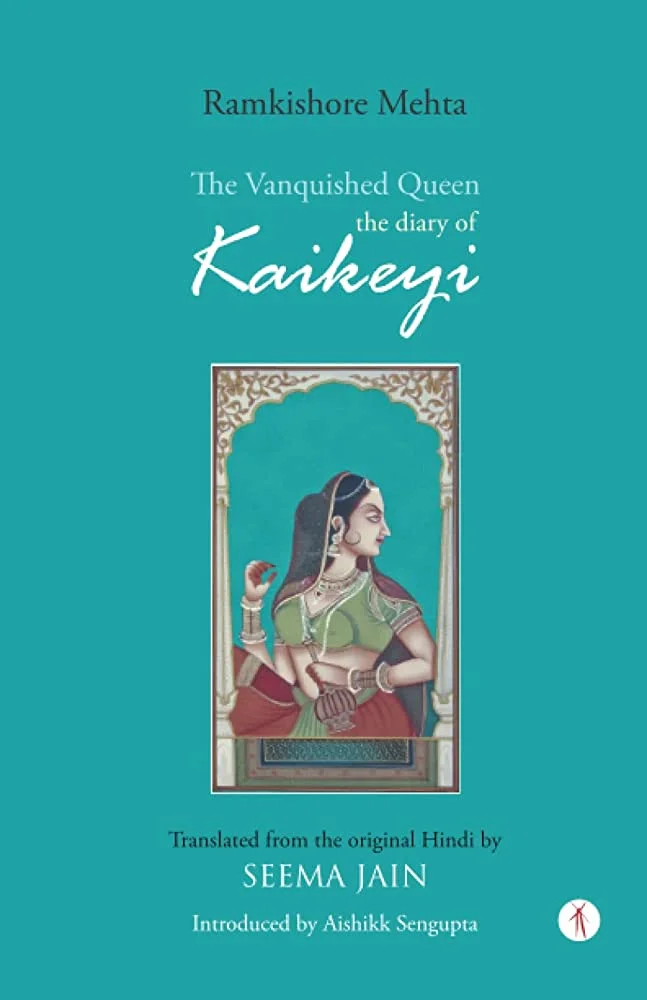
Review: The Vanquished queen: the diary of Kaikeyi

A review in SETU magazine by Chaitali Sengupta The Hindu epic Ramayan focuses on the legend of Lord Shri Ram- the supreme man (Maryada Purushottam) who perfected righteousness. Although the epic is peopled with several women characters, they are mostly portrayed as powerless characters who not only endure extreme events but are also secondary to the status of men. The women in this epic are examples of their indomitable sense of stree dharma, be it Sita, Kaushlaya, or Urmila. The only exception is Kaikeyi, the second queen of king Dasharath, the fierce, villainous stepmother of Shri Ram.  Ramkishore Mehta’s original book ‘Parajita ka Atmakathya’claims to be a translation from Prakrit. It is based on the events described in the Valmiki Ramayan. Independent researcher Aishikk Sengupta says at the outset that ‘The author pens down his own narrative that he borrows from trusted translations and commentaries of the epic’. The translator Prof. Seema Jain explains that she “found the novel appealing in its logical interpretation of many aspects of the epic, which are floated as myths for public consumption.” Read the full review here: https://www.setumag.com/2022/12/book-review-diary-of-kaikeyi-by-seema.html

Blog, Poems

Poem: The path seeks you

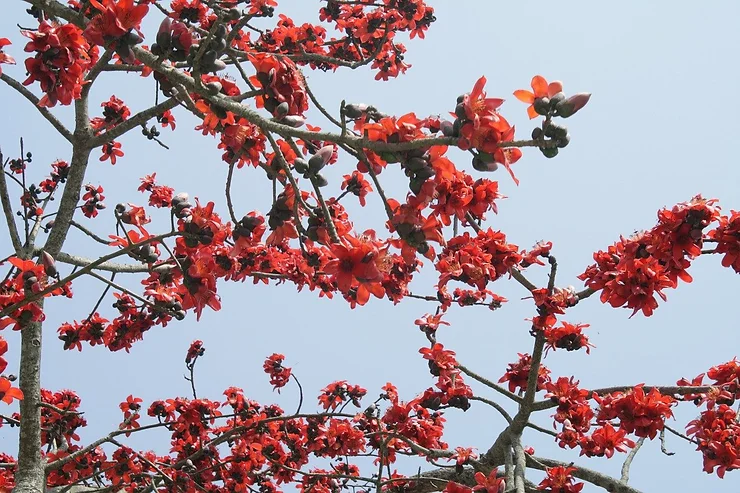
The Intercultural Poetry and Performance Library (IPPL)  has brought out two poems written by me in their current issue. Here is the first one. For all those who do not know- The Intercultural Poetry and Performance Library (IPPL) is a non-profit organization that aims to generate academic interest towards poetry, nurture creativity and reading habits. The IPPL is committed to bringing poetry to the heart of the nation. Luminaries like Sankha Ghosh (Former President, Advisory Board), Bashabi Fraser (Chief Ideator and President, Advisory Board), Sanjukta Dasgupta (President), Jaydeep Sarangi (Vice President) are associated with IPPL.   The path seeks you Sometimes, the sea within you shifts to make a path, the wayward waves, crashing inside, map the endless twists and turns, like a signpost on your soul. Or, like the jagged lifeline on your palms, threading, winding, through the creased canvas of your skin, arriving at the crossroads of destiny. Sometimes, you are like the water creating your own way, through the shimmering flow, to the tumultuous expanse of the infinite deep. Then, the path seeks you. Then, you are the path. By Chaitali Sengupta You can browse the other poem here: https://ippljournal.org/issue-4-april-2023/chaitali-sengupta/ Photo Credit: Pixabay, free photos

Blog, Poems, Translation

Translation: 3 poems from Tagore’s LIPIKA

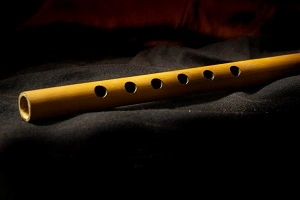
By Chaitali Sengupta The original prose poems by Rabindranath Tagore, Purono bari (The old house), Banshi (Theflute) and Prothom Shok (First sorrow) were collected in Lipika first published in 1922 (BE1329). It is a small book where Tagore introduced short poetic prose pieces. THE FLUTE The voice of the flute is an eternal one, a voice belonging to forever; just as the descent of theGanges, flowing out of the matted locks of Shiva, spilling upon the breast of earth. Like achild of heaven, she plunges down, wishing to frolic with the dust on earth, in her quest of theheavenly game. Standing on the wayside, I hear the flute’s strain; it fills my mind with feelings unknown. Itry hard to relate the ache that comes from the tune, with my mundane joys and sorrows, butin vain. I realize that it is more scintillating than any joys I’ve experienced; more intense thanany tears that I’ve shed. It makes me feel that the truth resides not in knowing, but it dwells in the unknown. How ismind able to think in this capricious manner? I’ve no answer to that. At dawn today, I woke up hearing the tune of the flute. There was a wedding in the nearbyhome. The melodious strain that emanates from the flute on the first day of marriage matchesin no way with the tunes of the days that follow. Can the flute, like a divine oracle, warn usabout the private frustration, the deep dejection, the neglect, the insult, and the sheer fatigue,about our restrained desires, our monstrous bickering, the unforgiving petty conflicts, thedusty miserliness of our daily life struggles? The veil of the familiar, regular words upon the mundane life is yanked away in one go withthe melodious strain of the flute. The bride and the groom exchange their first glance of lovein the blessed moment, and unite forever under the delicate canopy, as the groom lifts the redveil of his demure bride. And the flute, through its tuneful melody, sings of this exaltedmoment. When the flute plays along the songs of exchanging the garland of love, I look towards thebride, being wed in our neighboring home. Wearing a golden necklace around her neck, apair of anklets on her feet, she stands on a lotus of joy that grew in the lake of tears. As I look through the melody of the flute, she appears ethereal to me. The girl, who was oncea familiar face from the known household, now manifests as the bride of an unknown family.The flute says, “This is the truth.” Read other two translations here: https://museindia.com/Home/ViewContentData?arttype=poems&issid=105&menuid=10317 

Blog, Review

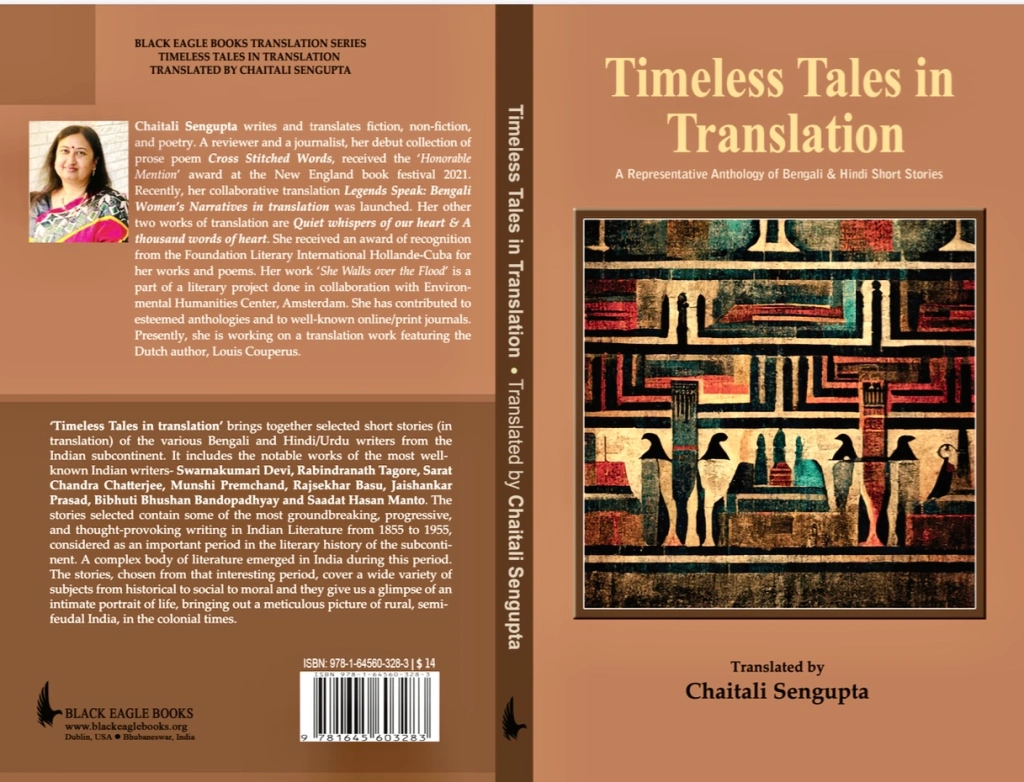
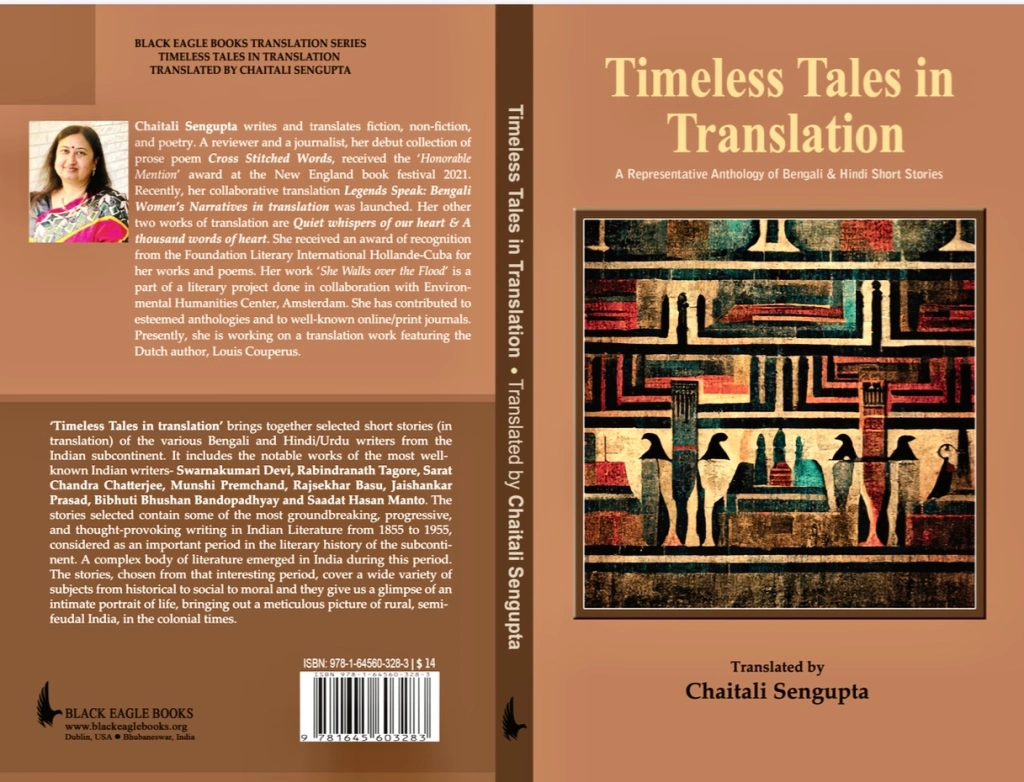
Review: From India with love : Timeless Tales in Translation

By Muktha Kartik ‘Words travel worlds and the translator does the driving‘! Whoever said this has hit the nail right on the head. How else could great epics like Odyssey cross the shores of Greece and reach every corner of the world? In a world that is increasingly becoming international, stories from across cultures and languages take center stage. Award winning author Chaitali Sengupta takes the driving seat in ‘Timeless Tales in Translation‘ to bring selected classic Indian short stories to the Netherlands. Handpicked collection Chaitali has selected an ideal mix of short stories from various well-known Indian writers. From Nobel Laureate Rabindranath Tagore to Saadat Hasan Manto, the authors, and their works cover a wide variety of topics from history to morals. The collection features two stories by Munshi Premchand that revolve around endurance. A ‘Winter’s Night‘ is a delightful tale about testing the endurance of a farmer to the elements whereas  ‘The Salt inspector‘ is a heartwarming read about how the integrity of a young officer endures various trials. The stories featured in this book are like chalk and cheese and yet, they bring to life the true picture of India during colonial times.   Truly timeless All the stories were written between 1855-1955. How can the stories from over a century back still be relevant? Readers will be pleasantly surprised that the themes are all the more pertinent in modern times. Rabindranath Tagore’s ‘Bolai’ deals with the evergreen theme of the conservation of nature as seen through a young boy’s eyes. in a world fighting deforestation and climate change, we need more Bolais in this world than ever before!   Read the full article here: https://eindhovennews.com/culture/2023/03/from-india-with-love-timeless-tales-in-translation/

Blog, Review

Review: Varied Themes span a century in Twelve Translated Tales

By Prof. Seema Jain Translators are like architects, building bridges of communication, understanding and inclusivity across linguistic, geographical, cultural, and ethnic borders, unifying diverse people, cultures, and languages through their magic touch. Timeless Tales in Translation by Chaitali Sengupta is a unique work in the domain of translated literature, as it takes up prominent tales from the masters of the craft in Hindi, Urdu, and Bangla, spanning over a period of almost a hundred years (1855-1955). This expansive framework gives her the advantage of traversing the diversity of a country like India in the pre-and post independence era across the socio-cultural, geographical and linguistic spectrum. The translator has discreetly chosen the tales for translation, as these tales represent the eminent writers’ varied and wide ranging thematic concerns. Read the full article here: https://www.differenttruths.com/literature/short-story/varied-themes-span-a-century-in-twelve-translated-tales/

Uncategorized

Visual verse: UNTOUCHED

  It opens up like a split-second vision in a thunderous flash, a fleeting, evanescent image conjuring up the past and future. Like a photographic ideal. Both for the seer and the seen. A moving mirror, like a sacred vision, pirouettes against the canvas of the blue limitlessness, rearranging the signs of the physical universe with an infinite array of glistening reflections. She feels as if she is looking through a glass of hard rock ice beyond the tunnel of her suffering. A passage from night to a bright day, when the image suddenly bleeds before her eyes, leaps to her mind and swells, producing a strange intoxication of a vision that unfurls in the breeze around the placid lake. There, against the pure light, it is impossible to feel the edge of the abyss, the desolating depths of darkness and evil. It anchors her, shelters her in this azure canopy of bewitching luminosity. It has been like that for her for quite some time now. Images appearing and disappearing, leaving her to wonder whether those were more dreamt than seen. But the pure sensation that comes over, a compressed energy running through her, dismantling the infinite, dizzying her to merge with the bright light on the other end of the tunnel. No, that is no hallucination. There’s a hidden energy, a hidden will she knows in the limpid grace of water, as it tries to place her out of her own self, connecting her with a silence, untouched. She tries to decode the message, in its final form; it vanishes, making her its hypnotic prisoner. What was it, she wonders? Could it be the sign of a future humanity promising eternity? By Chaitali Sengupta Published at: https://visualverse.org/submissions/a-silence-un-touched/ Image by Stefan Keller given as a prompt at Visual verse

Poems

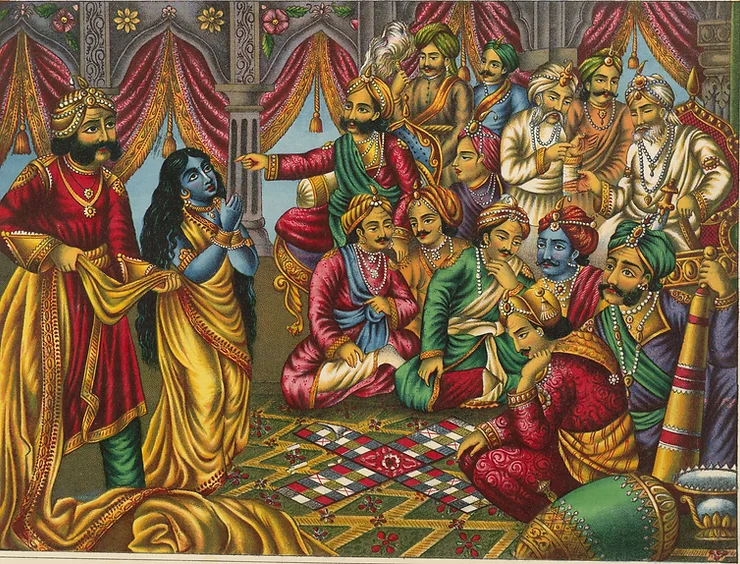
Poem: Draupadi

    From the womb of blazing sacrificial fire, She is born. A woman devoid of childhood, a feminine pawn. Split among five men She is yagnaseni, the daughter of fire. And forever she burns, in the patriarchal flame of hatred, greed, lust and ambition like an earth on fire.   Helpless, bleeding, wrapped in one cloth, she stands helpless, on the streets of history, bereft of honor, covering herself in shame. Her flowing mane, untamed, blood-red, twisted in the hands of tyranny causing a thousand pain. Her pain is the pain of each disrobed woman, her torment, a legacy, stitched to our soul. Her honor, still a question mark, a movable property, on the shrine of Dharma.   Through the raging river of time, the stripping continues, through cultures, through societies, the same draupadis, gambled and given away, at the hands of patriarchy.   Draupadi: She is the tragic heroine, one of the central characters and the common wife of the Pandavas in the Indian epic, Mahabharata. Yagnaseni: is another name for Draupadi in the epic Mahabharat. Dharma: The concept of Dharma is pan-indian. It means broadly the path of righteousness Published at: https://concettapipia.wixsite.com/aspiringwriterssoc/post/poetry-22 Photo Credit: https://upload.wikimedia.org/wikipedia/commons/0/05/Draupadi_s_presented_to_a_pachisi_game.jpghttps://upload.wikimedia.org/wikipedia/commons/0/05/Draupadi_s_presented_to_a_pachisi_game.jpg

Uncategorized

Translation: Jani tomar ojana nahi go

Jaani tomar ojona nahi go…… a melodious songby Tagore, with deeply spiritual meanings. This translation of mine was published in Geetabitan.com in the year 2016. The secrets in my heart, is not unknown to thee Much as I wish to keep it a secret, My eyes reveal every bit of it. Afraid of saying what I don’t mean I keep away, far away from you. On the wayside, I stay away And yet you come to know What lurks in the secrets of my heart. The shadowy silence, in my hidden, secluded altarIs shattered by your pealing laughter. Every desolate hours of mine Is spent in deep rumination As I, unmindfully wield a song You hear every now and then And come to know What lurks in the secret of my heart. – Translated by Chaitali Senguptahttps://www.geetabitan.com/lyrics/rs-j/jaani-tomar-ajaana-english-translation.html Picture credit: Free Photo, Pixabay, James Wheeler.

Translation

Translation: BOLAI, a story by Tagore

  It has always been a desire to translate Tagore’s short stories into English. but the courage to do it was lacking. This translation of his famous short story Bolai I translated for the Singapore based literary platform BORDERLESS JOURNAL. BOLAI, by Tagore is the story of a young boy’s deep connection with Nature. You can read the translation here: It is often said that human life is a culmination of various other life forms in this world. In our daily lives, most often, we come across diverse characteristics of other animals in a human being. Honestly said, in the character of a human, we see a blend of attributes usually found in animals. The domesticity of a cow and the ferocity of a tiger reside in the same human; it is, as if, the snake and the mongoose are both put together. It is somewhat like the melody that is created when the entire range of notes come together. Only then, a raga is formed. However, in a raga, one note can be more prominent than the other. Continued at: https://borderlessjournal.com/2021/01/14/tagore-stories-in-translation-bolai/  

Review

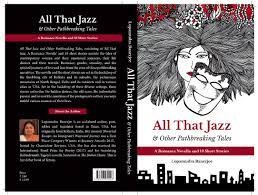
Review: All that Jazz and other pathbreaking Tales

In the recent days, I happened to come across Lopamudra Banerjee’s “All that Jazz and other Pathbreaking tales.” I was happy to review it and it found a place in the Setu Bilingual MAGAZINE. Captivating stories about ordinary lives In the recent days, I happened to come across Lopamudra Banerjee’s “All that Jazz and other Pathbreaking tales”. I often read and enjoy her brilliant write-ups on various online literary platforms. Lopamudra Banerjee is a writer, poet, memoirist in her own right; she has written and published “Thwarted Escape: An Immigrant’s Wayward Journey” – a memoir; two poetry collections and also translated Tagore’s selected works of fiction and drama. Her “Thwarted Escape” is also an award-winning memoir/nonfiction book and her other works are wonderful too, especially the English translation of Tagore’s timeless classic “Nostonirh” and 7 other stories (The Broken Home and Other Stories). She has done an excellent job of translating this rather daunting novel and Tagore’s women-oriented stories and comes over as a powerful translator. This time, however, she has come up with her first book of fiction, a collection of 10 short stories and a novella. It’s a captivating compilation, to begin with. In my opinion, her short stories (A fistful of wants, Rendezvous, Trapped, Femme Fatale, Amor Mio– my favorites) are wonderful for their characterizations and plot. Each story has its suspense and surprise, a mix of a seductive fantasy and an unapologetic realism, filled with gripping twists and turns and flawed, but relatable characters. Their tales of heartbreak and revelation are nuanced and riveting, as the author moves gracefully from one character to another- be it the 16-year-old self from Rendezvous, or the abused, exploited Shalini, from Amor Mio. Her narrative voice is wonderful, and she reveals their inner secrets, with intimate details, so vivid, that it makes the readers feel that they have known these characters for long. And that is perhaps not wrong, for we relate with Lopamudra’s characters on a deeply personal level, for she brings out their humanity. The appeal of her stories lies in the fact that they provide catharsis in the end, and we await the next one coming up. Her storytelling power is impressive.   Full review on: https://www.setumag.com/2021/02/all-that-jazz-other-pathbreaking-tales.html

Built with creativity and care by DigitalSpan
Scroll to Top